- Corporate
- Solutions
- Microsoft Solutions Overview
- Microsoft Dynamics 365 Business Central ERP Solution with Copilot Ai technology
- Microsoft Dynamics 365 – Sales (CRM)
- Microsoft Sustainability Solutions
- Microsoft Copilot Services
- Microsoft Fabric
- Microsoft Dynamics 365 Finance
- Microsoft Dynamics 365 Supply Chain Management
- Marketplace Offers
- AI Agents
- Services

Blog
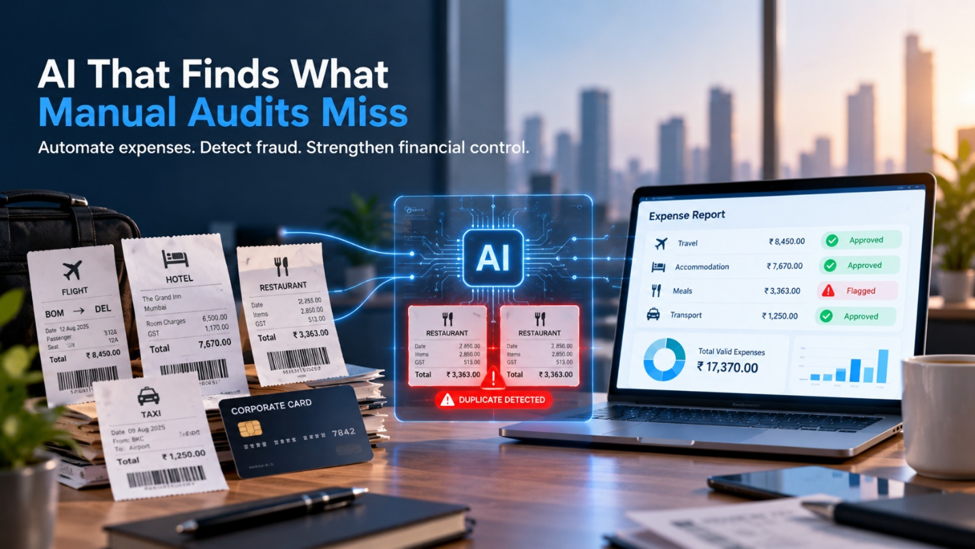
How AI Agents Are Transforming Corporate Expense Management & Stopping Fraud
Managing corporate finances in a rapidly expanding Indian enterprise has always involved a mountain of paperwork, receipts, and meticulous manual audits. For years, finance departments across corporate hubs like Bengaluru, Mumbai, and Delhi have relied on legacy software and rigid policies to keep track of employee spending. Yet, despite these rules, corporate expense management remains one of the most tedious, error-prone, and leak-prone functions in modern business.
Employees dread filling out lengthy expense claims, often leaving submissions to the absolute last minute. Meanwhile, finance teams spend countless hours cross-checking crumpled physical receipts, validating currency conversions, and hunting down policy infractions. Worst of all, traditional systems are structurally blind to clever, subtle forms of corporate fraud—such as duplicate submissions, split receipts designed to bypass approval thresholds, and inflated claims buried deep within thousands of monthly transactions.
Fortunately, the landscape of corporate finance is undergoing a monumental shift. Enter the expense management ai agent—an intelligent digital workforce solution designed to automate end-to-end expense workflows, eliminate administrative drag, and catch fraudulent activities before a single rupee leaves the company account. By integrating advanced machine learning directly into core enterprise systems, modern organisations are turning a historically painful administrative chore into a streamlined, secure operation.
The Hidden Costs of Legacy Expense Processes in India
In a diverse and fast-paced commercial environment like India, business travel, client entertainment, and operational procurement happen at a breakneck speed. Sales teams traverse states, consultants fly out for client workshops, and regional branches incur daily operational expenses.
When these expenses are managed through outdated, manual systems, several structural issues emerge:
- The Administrative Black Hole : Employees spend hours manually keying in dates, merchant names, tax breakdowns (such as CGST, SGST, or IGST), and categories. This administrative friction reduces productive selling and operational time.
- The Audit Bottleneck : Finance and accounts payable (AP) teams are forced to manually verify every single line item. When dealing with thousands of monthly claims, human auditors suffer from fatigue, leading to oversight and rubber-stamping.
- Delayed Reimbursements: Because verification takes weeks, employees often face frustrating delays in getting their personal money back, dampening morale.
- Vulnerability to Fraud: Manual systems struggle to spot anomalies. Whether it is an employee altering a digital PDF invoice or submitting the same taxi bill twice across different months, static controls rarely catch sophisticated fraud patterns.
Enter the Expense-Management-AI-Agent: How It Works
Modern artificial intelligence has evolved far beyond basic rule-based automation. Today’s enterprise-grade solutions, such as those engineered by Compusoft Advisors through their specialised Expense Management AI Agent, act as autonomous digital problem-solvers embedded natively within the corporate ecosystem.
Instead of forcing users to navigate clunky web portals, an expense-management-ai-agent simplifies the entire lifecycle through multi-channel accessibility:
- Shared Mailboxes : Employees can simply forward airline tickets, hotel bills, or vendor receipts to a designated corporate email address. The AI monitors the inbox, extracts key data points (merchant name, date, tax components, and total amount), and automatically populates expense lines.
- Mobile Capture : On-the-go professionals can snap a photo of a receipt using a mobile application. The agent instantly reads the image, categorises the expense, and drafts the report.
- ERP Native Integration : Working seamlessly within platforms like Microsoft Dynamics 365 Finance & Operations, the agent monitors unattached receipts and converts them into structured entries with minimal manual intervention.
Crucially, the system applies contextual intelligence. It doesn’t just read numbers; it understands business policies, infers correct categories, and flags non-compliant expenditures before the report is even submitted.
Stopping Fraud Before It Happens: The AI Advantage
While saving time is a massive benefit, the most transformative impact of an AI-driven expense agent lies in its ability to detect and stop fraud. Human auditors look at individual reports in isolation, but AI looks at the entire historical fabric of enterprise spending, spotting patterns that human eyes would easily miss.
1. Automated Receipt and Transaction Matching
One of the most common leakages occurs when employees submit out-of-pocket claims for expenses already paid via corporate credit cards. An AI expense agent features advanced auto-match capabilities. It instantly cross-references submitted receipts with live credit card feeds, automatically reconciling transactions and shutting down double-dipping attempts.
2. Spotting Duplicate and Altered Invoices
Fraudsters often rely on minor alterations—changing a date by a day, tweaking an invoice number, or cropping a PDF receipt to hide details. Computer vision and machine learning models can detect pixel-level alterations, trace digital footprints, and instantly flag duplicate receipts even if they are uploaded weeks apart or across different regional cost centers.
3. Catching Policy Circumvention (Receipt Splitting)
If a company policy states that any meal expense above ₹5,000 requires managerial pre-approval, dishonest actors might split a ₹9,000 bill into two separate ₹4,500 receipts. An AI agent tracks velocity, vendor trends, and employee behavior over time, instantly identifying suspicious transaction clustering and alerting the internal audit team.
4. Continuous Compliance with Indian Tax Regulations
For Indian businesses, compliance with Goods and Services Tax (GST) input credit claims is critical. If an employee submits an invoice with an incorrect or missing GSTIN (Goods and Services Tax Identification Number), the company loses valuable tax credits. AI agents automatically validate vendor GSTIN details against official databases, ensuring every claim is legally compliant and audit-ready.
Transforming Finance from Police to Strategic Partners
In the past, the corporate finance department was often viewed negatively—an internal police force obsessed with rejecting receipts and slowing down operations. By deploying an intelligent expense agent, organisations can completely change this dynamic.
When routine processing, initial receipt matching, and baseline fraud detection are handed over to autonomous AI agents, finance professionals are freed from repetitive data entry. Instead of spending 80% of their time checking math errors and chasing missing bills, they can focus on high-value strategic tasks: analyzing spend trends, negotiating better corporate rates with preferred vendors, and optimizing cash flow management.
Furthermore, employees enjoy a friction-free experience. Submitting an expense report becomes as simple as dropping a photo into a chat or forwarding an email, resulting in faster approvals and prompt reimbursements.
The Future of Indian Corporate Spend Control
As Indian businesses scale to compete on a global stage, operational agility and stringent financial governance must go hand in hand. Relying on spreadsheets, manual receipt packets, and reactive spot-checks is no longer viable in a high-speed digital economy.
The shift toward conversational and autonomous finance is accelerating. By implementing advanced automation solutions like the Expense Management AI Agent from Compusoft Advisors, enterprises can secure their bottom line, eradicate administrative bottlenecks, and build a transparent, fraud-resilient financial culture. The future of expense management isn’t just about tracking where money went—it’s about having an intelligent partner ensuring that every single rupee is spent wisely before it leaves the door.
Recent Post
-
17 Sep 2026How AI Agents Are Transforming Corporate Expense Management & Stopping Fraud
-
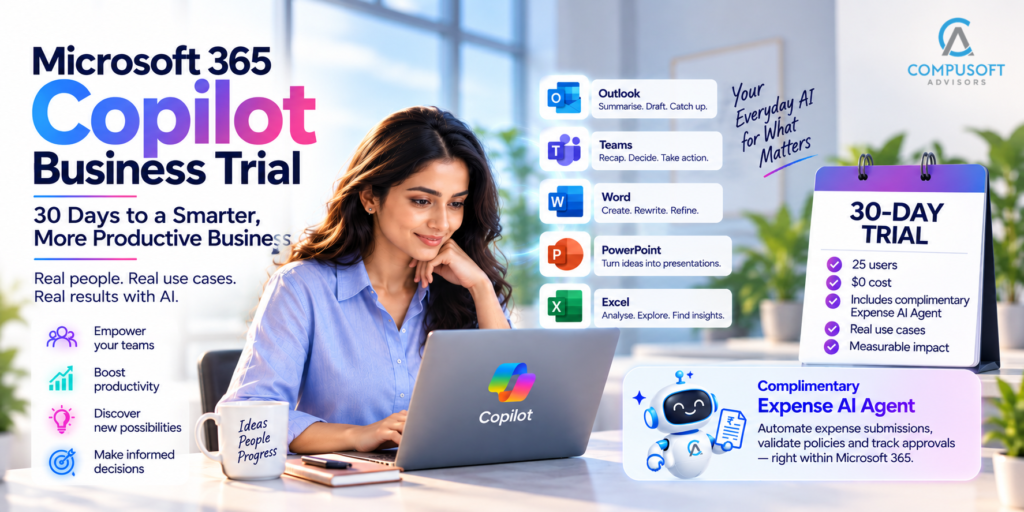 11 Sep 2026COMPUSOFT ADVISORS INDIA | MICROSOFT 365 COPILOT BUSINESS TRIAL: A 30-DAY GUIDE FOR BUSINESSES
 -
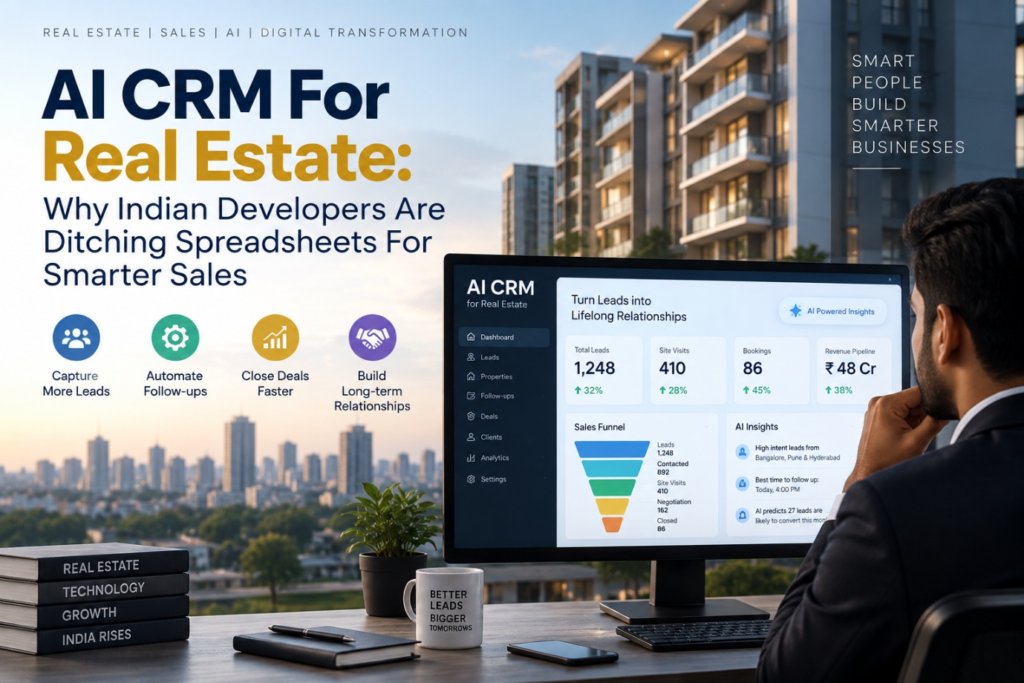 10 Sep 2026AI CRM FOR REAL ESTATE: WHY INDIAN DEVELOPERS ARE DITCHING SPREADSHEETS FOR SMARTER SALES
 -
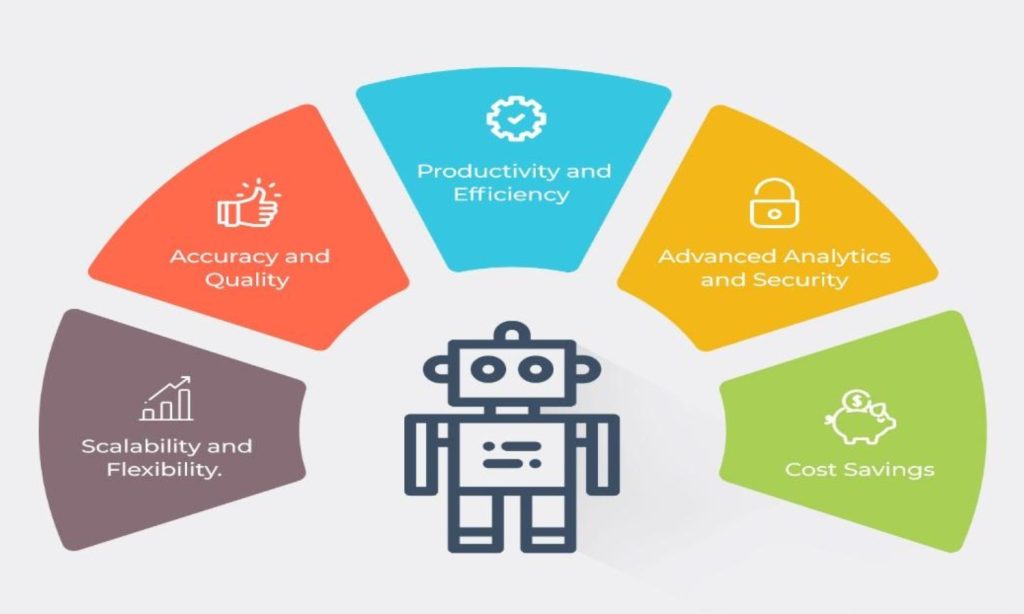 24 Jun 2024HOW AI-DRIVEN TECHNOLOGY CHATBOTS ARE BECOMING MORE AND MORE MEANINGFUL TO BRANDS?
 -
 24 Jun 2024COMPUSOFT ADVISORS ANNOUNCED AS A WINNER IN THE 2019 IAMCP GLOBAL PARTNER-TO-PARTNER AWARDS PROGRAM
 -
 24 Jun 2024AI POWERED OMNI CHANNEL BOT PLATFORM DRIVES BETTER CUSTOMER ENGAGEMENT FOR BFSI SECTORS.
Grow Your Business Today
Aggarwal Estate, Chitalsar Manpada, S V Road, Thane 400 610
Microsoft Solution Partner
Quick Link